
How the Olycom IM-WP054BGE Solar PoE Switch Works?
author: Olycom
2026-03-27
The Olycom IM-WP054BGE is a 5-port industrial gigabit PoE switch built specifically for solar-powered, off-grid, low-voltage, and harsh-environment networking. Its biggest advantage is the built-in DC voltage booster that unlocks PoE deployment where standard switches cannot function, paired with Web managed capabilities for professional remote control. This combination makes it the most practical solution for real-world off-grid and industrial projects.
Core Working Principle: Wide Voltage Input + Active Boost Conversion

Standard PoE switches only support 48V DC input, making them unusable with solar panels, batteries, or vehicle power. The IM-WP054BGE solves this with its integrated boost circuit:
- Wide 12–48V DC input compatibility: Directly accepts unregulated power from 12V/24V solar systems, battery banks, vehicle power, trunk power, and low-voltage industrial grids—no external DC–DC converter needed.
- Active voltage boost & stabilization: The internal booster automatically steps up and regulates fluctuating low voltage to a stable 48V DC that fully meets IEEE 802.3af/at PoE standards. This eliminates voltage drops, device reboots, and signal loss common in solar setups.
- Intelligent PoE power delivery: Auto-detects PoE devices before supplying power to avoid damage. Each PoE port supports:
- IEEE 802.3af: up to 15.4W
- IEEE 802.3at: up to 30W
- IEEE 802.3bt (60W–90W), depending on model
- Dual PoE pin support: Works with both 1/2-3/6 and 4/5-7/8 pinout modes for full compatibility with IP cameras, wireless APs, sensors, and VoIP phones.
- Gigabit performance + Web managed control: Provides 10/100/1000Mbps transmission, 40Gbps switching bandwidth, and Web managed functions including remote monitoring, PoE scheduling, VLAN, QoS, and port reset—ideal for both simple and large-scale networks.

Why Boost Technology Is Mission-Critical for Real-World Industrial & Solar Applications
The built-in voltage booster is not an optional feature—it eliminates the biggest barrier to PoE use in off-grid, outdoor, and mobile environments. Without it, installers must add bulky external converters, which increase cost, create more failure points, waste cabinet space, and raise maintenance workload—especially in remote, unmanned locations.
Boost technology delivers irreplaceable value in real deployments:
- Eliminates external 48V converters: Reduces hardware costs, wiring complexity, and failure risks in off-grid solar and industrial systems.
- Stabilizes volatile solar/battery power: Maintains consistent 48V PoE output even when input voltage fluctuates, preventing camera downtime, AP disconnections, and data interruptions.
- Unlocks PoE in locations with no stable 48V power: Enables reliable PoE deployment in rural farms, border areas, vehicles, highways, and industrial sites with only low-voltage DC available.
- Supports 100-meter long-distance PoE transmission: Ensures stable power and data delivery over standard Ethernet cables without voltage loss.
- Works seamlessly with Web managed functions: Combines rugged wide-voltage performance with professional remote network management for large-scale, unattended deployments.
In off-grid surveillance, smart city, vehicle, and industrial automation projects, boost technology is not just useful—it is required for solar-powered PoE to operate reliably.
Real-World Application Scenarios
1. Off-Grid Solar Security Surveillance (Farms, Borders, Construction, Wilderness)
- Power: 12V/24V solar panel + battery system
- How it works: The switch boosts unstable solar voltage to stable 48V PoE, powering IP cameras over 100m Ethernet cables.
- Web managed value: Remote PoE power cycling, bandwidth allocation, and real-time status monitoring reduce on-site maintenance for large, unmanned surveillance networks.
2. Outdoor Wireless AP & Smart City IoT (Highways, Parks, Streetlight Sites)
- Power: Streetlight low-voltage DC or solar kits
- How it works: Uses existing 12–48V power to run Wi-Fi 6/6E APs and environmental sensors.
- Web managed value: VLAN isolation, QoS for wireless traffic, and remote reboot minimize service visits for hard-to-reach pole-mounted devices.
3. Vehicle & Rail Mobile Networking (Trucks, Buses, Rail Systems)
- Power: 12V/24V on-board vehicle power
- How it works: Boosts unstable vehicle voltage to safe, standard PoE for mobile cameras and telematics devices.
- Web managed value: Remote diagnostics and traffic prioritization ensure stable communication in mobile industrial environments.
4. Industrial Automation & Harsh Factory Sites
- Power: 12–48V industrial DC power grids
- How it works: Delivers PoE to PLCs, sensors, and field devices while resisting dust, humidity, and EMI.
- Web managed value: Port control, loop prevention, and real-time monitoring support stable 24/7 automated production.
5. Emergency & Temporary Communications (Disaster Relief, Events)
- Power: Portable solar generators or battery packs
- How it works: Plug-and-play deployment without mains power.
- Web managed value: Quick remote configuration and troubleshooting support fast, reliable temporary networks.
Key Market Problems Solved by the IM-WP054BGE
- Eliminates expensive 48V power infrastructure: Uses widely available 12–48V low-voltage power instead of dedicated 48V supplies.
- Fixes unstable solar/battery power issues: Internal boost regulation prevents downtime caused by voltage fluctuation and drops.
- Simplifies cabling in hard-to-wire areas: Single Ethernet cable carries power + data up to 100 meters, cutting labor and material costs.
- Survives extreme outdoor/industrial environments: -40°C to +75°C operating temperature, 6KV surge protection, IP40 metal casing, and industrial EMC ensure long-term reliability.
- Balances simplicity and professional control: Plug-and-play for small projects; Web managed for enterprise-grade monitoring and management.
- Reduces maintenance in unmanned sites: Remote Web management cuts on-site service trips and lowers total cost of ownership.
Overcoming PTZ Power Deficiencies: Implementing 90W IEEE 802.3bt in Petrochemical Facilities
The Critical Role of IP67 Switches in Rail Transit Systems
Related Article
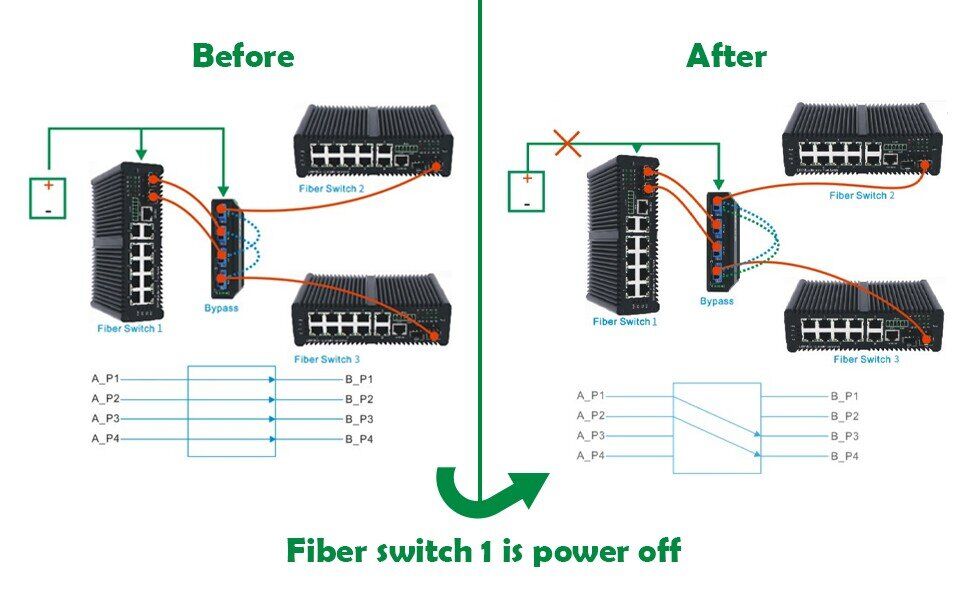
In optical fiber networks, power issues are often a major cause of communication interruptions. This is particularly critical in environments like industrial settings or data centers, where reliability is paramount. A power failure can cause the entire fiber link to go down, disrupting the overall operation of the system. To address this challenge, Olycom's fiber bypass switches with AC/DC dual power input functionality provide an effective redundancy solution.
Power Failures Causing Fiber Link Interruptions? AC/DC Dual Power Ensures Network Stability
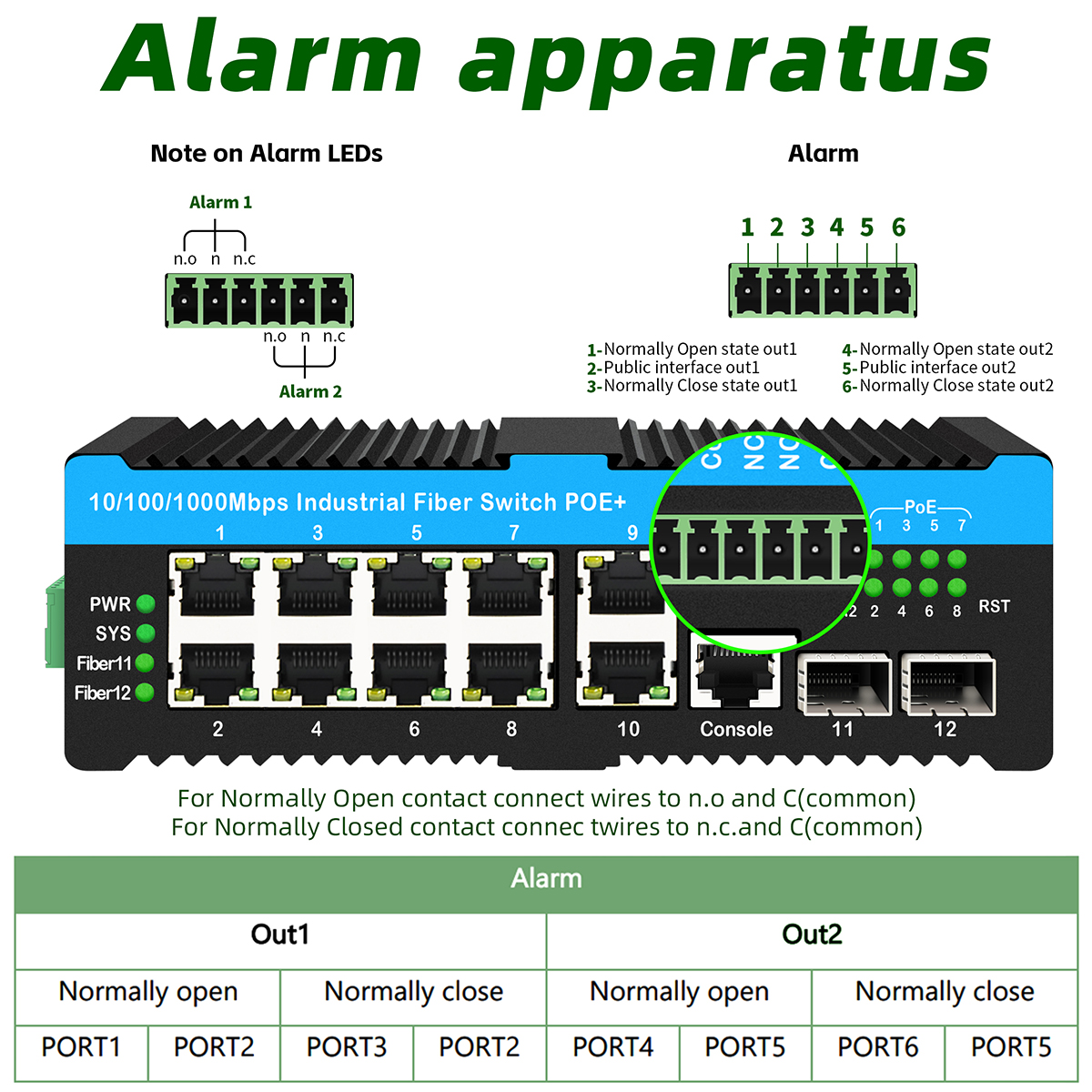
The relay alarm function transforms the switch from a network device into a control node
Industrial PoE Switch with Relay Alarm: Enabling Real-Time Response in Critical Networks
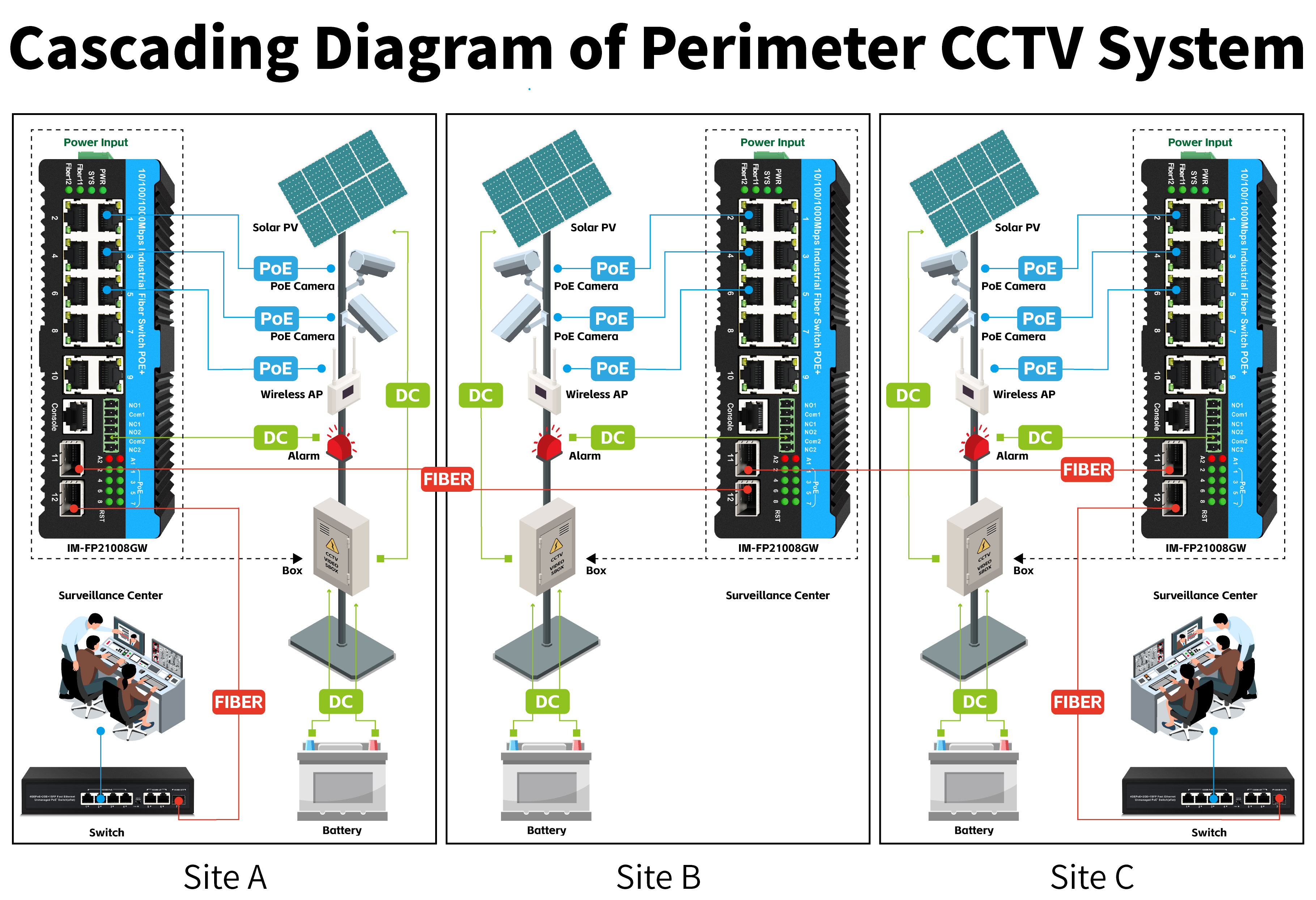
90W High Power Output: All 8 copper ports on the Olycom IM-FP21008GW comply with IEEE 802.3bt, delivering up to 90W per port.
Overcoming PTZ Power Deficiencies: Implementing 90W IEEE 802.3bt in Petrochemical Facilities
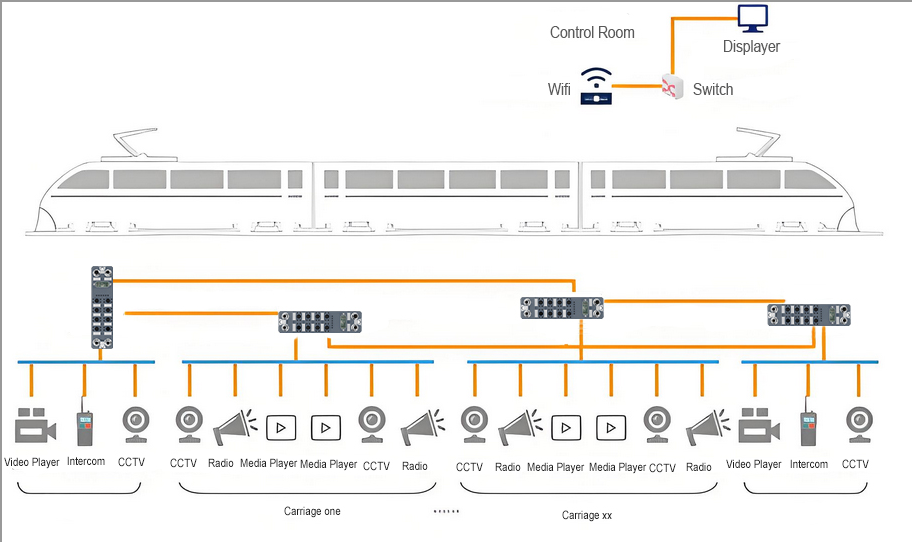
IP67 industrial Ethernet switches are more than just networking components; they are engineered solutions for mission-critical connectivity. By guaranteeing performance amidst dust, water, vibration, and temperature extremes, they form the resilient, hidden nervous system that supports modern signaling, passenger services, train operations, and security.
The Critical Role of IP67 Switches in Rail Transit Systems