Power Failures Causing Fiber Link Interruptions? AC/DC Dual Power Ensures Network Stability
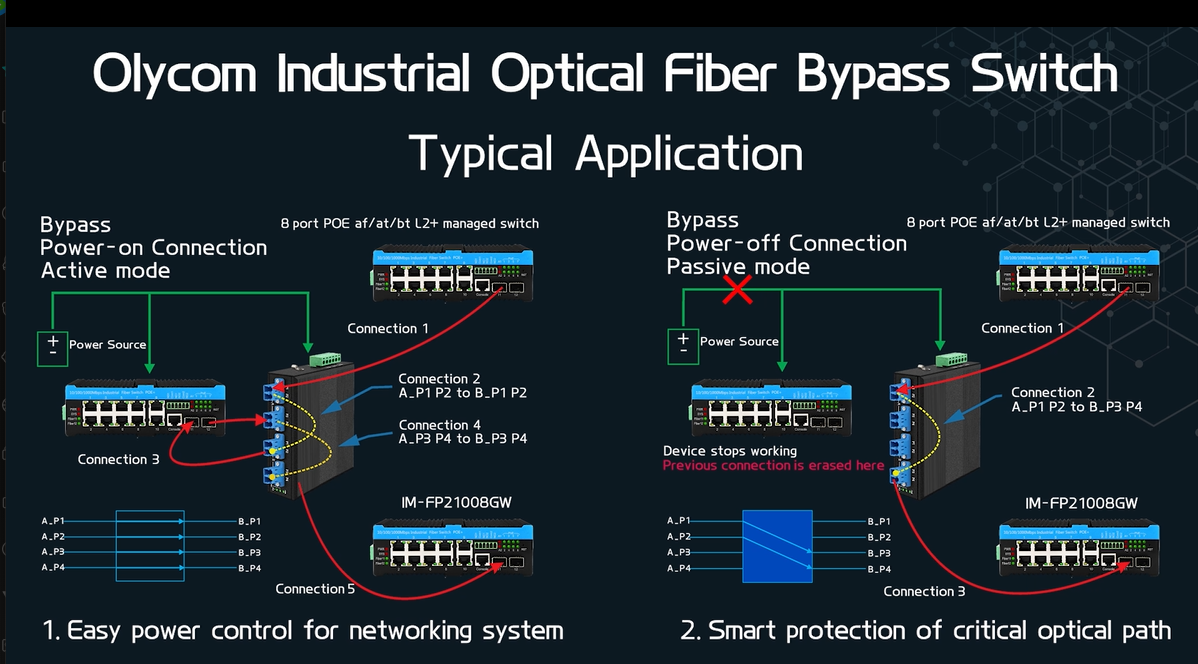
In optical fiber networks, power issues are often a major cause of communication interruptions. This is particularly critical in environments like industrial settings or data centers, where reliability is paramount. A power failure can cause the entire fiber link to go down, disrupting the overall operation of the system. To address this challenge, Olycom's fiber bypass switches with AC/DC dual power input functionality provide an effective redundancy solution.
How Do Power Failures Impact Fiber Networks?
In modern fiber communication systems, stable power supply is essential to maintain the transmission of data across fiber links. When power fails, the entire system operation is compromised. Especially in networks that require continuous operation and high reliability, even brief power interruptions can lead to prolonged outages, impacting system availability and performance.
For high-reliability environments such as data centers or industrial networks, even minor power disruptions can lead to significant data loss, equipment damage, or operational halts. To mitigate the risk of link disruptions caused by power failures, using a fiber bypass switch, particularly one equipped with AC/DC dual power input, is a proven solution.
Advantages of AC/DC Dual Power Input
Olycom's Fiber bypass switches with AC/DC dual power input are versatile enough to operate in both AC and DC power environments. Whether it's a DC power supply in industrial settings or an AC power supply in data centers, these devices can seamlessly integrate into the system, ensuring continuous operation. Additionally, the AC/DC dual power input provides power redundancy: if one power source fails, the other continues to supply power, ensuring the device does not shut down due to a power issue.
Extending System Uptime and Reducing Downtime Risk
Olycom's fiber bypass switches can come with a delay switching feature, which allows users to set a switch-over delay (typically between 1–8 minutes). This means that in the event of a power failure or device malfunction, the system can switch to an alternative power source or bypass path with a delay, ensuring the fiber network remains unaffected. For data centers or industrial automation systems, this delay can prevent erroneous switches due to brief fluctuations, further enhancing system stability.
How to Choose the Right Fiber Bypass Switch?
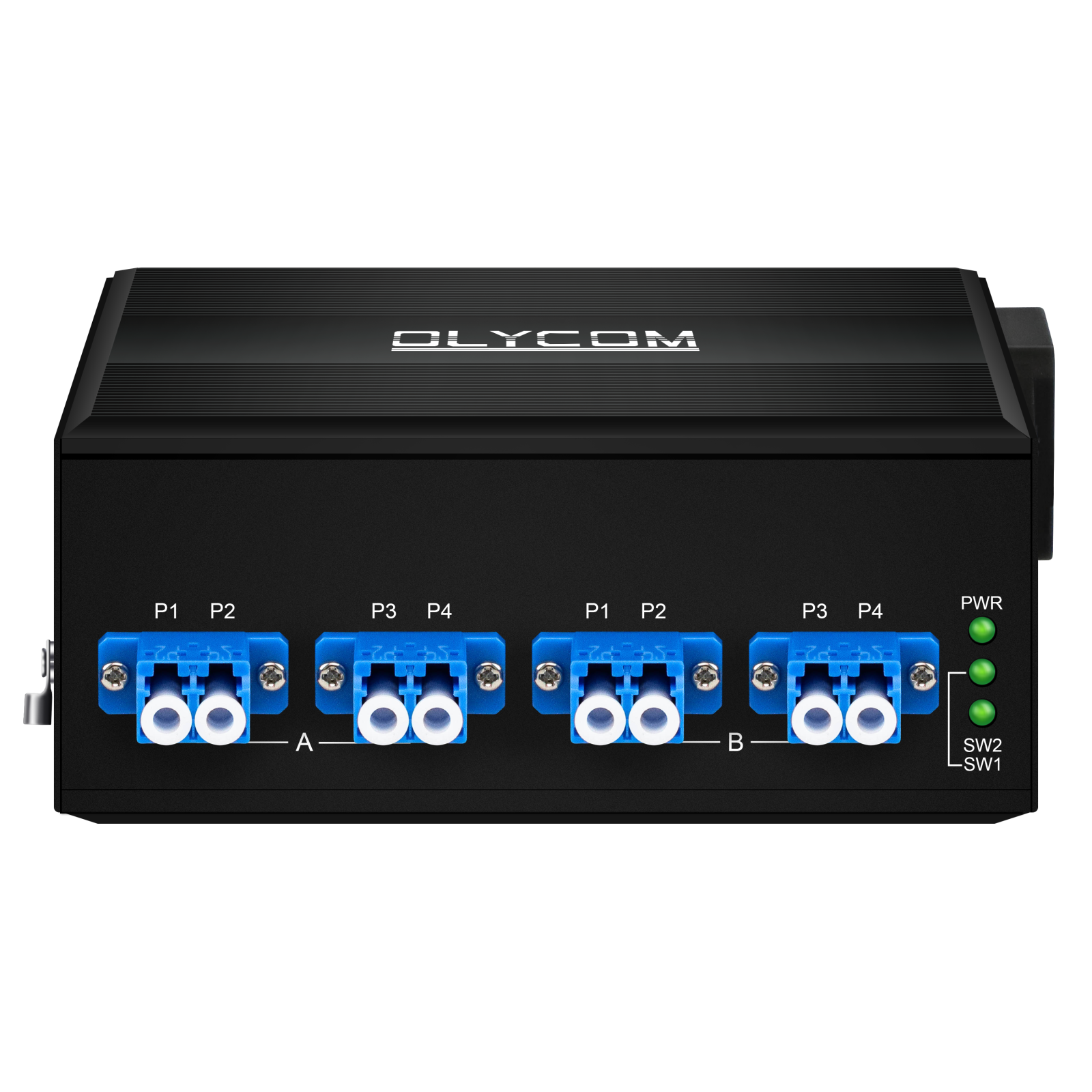
When selecting a fiber bypass switch, the following factors must be considered:
- Power Input Requirements: Ensure the device supports your power configuration (e.g., 12–52VDC or 110–220VAC).
- Power Redundancy: Choose devices with power redundancy to ensure uninterrupted operation in case one power source fails.
- Delay Switching Feature: Select a device with an appropriate delay switching function (e.g., 1–8 minutes).
- Environmental Adaptability: Make sure the switch's operating and storage temperature ranges meet your environmental needs.
Conclusion
In conclusion, Olycom's fiber bypass switches, combining AC/DC dual power input and delay switching features, provide highly reliable protection for fiber networks. Whether in data centers, industrial networks, or other applications requiring high availability and continuity, selecting the right bypass switch can significantly reduce the risk of link interruptions due to power failures, ensuring long-term, stable network operation.
If you are interested, please feel free to contact us for consultation.
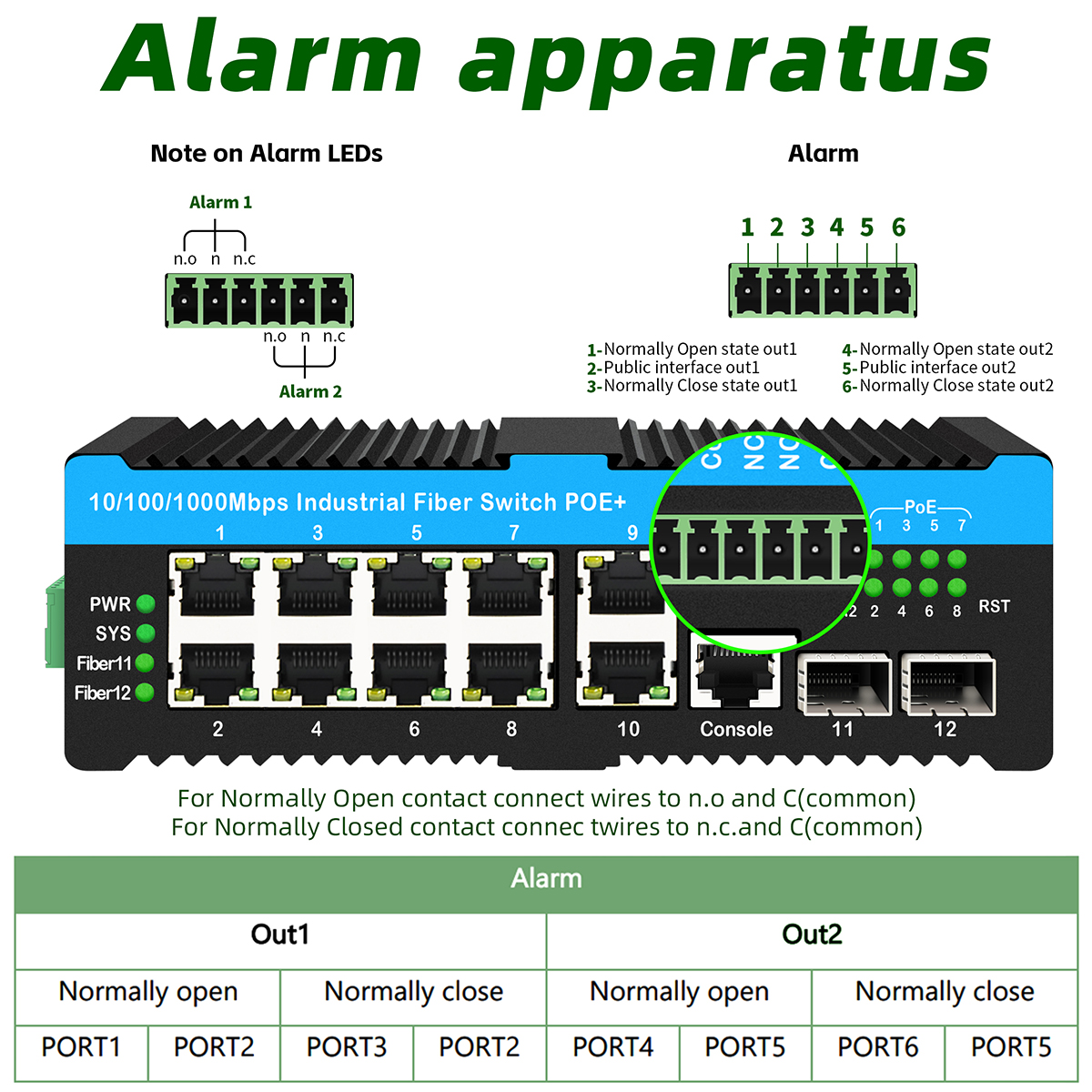
Industrial PoE Switch with Relay Alarm: Enabling Real-Time Response in Critical Networks
Related Article