The Critical Role of IP67 Switches in Rail Transit Systems
Rail transit systems, encompassing metros, light rail, and high-speed trains, form the backbone of urban and intercity mobility. Their operational efficiency, safety, and passenger experience increasingly depend on robust, real-time data communication networks. In the harsh and demanding environments of rail infrastructure, standard networking equipment often fails. This is where IP67-rated industrial Ethernet switches emerge as an indispensable component, ensuring seamless and reliable connectivity where it matters most.
What is an IP67 Switch?
An IP67 rating, defined by the International Electrotechnical Commission (IEC) standard 60529, signifies a superior level of protection for electrical enclosures.
-
IP6X: The "6" indicates complete protection against dust ingress (dust-tight).
-
IPX7: The "7" signifies protection against the effects of temporary immersion in water (up to 1 meter for 30 minutes).
IP67 switches are designed with ruggedized housings, sealed connectors, and conformally coated internal components to withstand these extreme conditions.
Key Functional Advantages of IP67 Switches in Rail
The design of IP67 switches directly addresses the core challenges of the rail environment:
-
Extreme Environmental Resilience:
-
Dust & Debris: They operate flawlessly in tunnels, trackside locations, and depots where airborne particles from brakes, wheels, and the environment are prevalent.
-
Moisture & Water: They resist rain, snow, high humidity, wash-down procedures in maintenance depots, and potential flooding in underground or ground-level installations.
-
Temperature & Vibration: Built for industrial use, they typically feature wide operating temperature ranges and can withstand constant vibrations from passing trains and unstable mounting surfaces.
-
-
Robust and Reliable Connectivity:
-
Mission-Critical Uptime: They provide stable network links for systems where failure is not an option, such as signaling and train control.
-
Ruggedized Ports: Utilizing M12 or other circular locking connectors, they ensure physically secure and weatherproof Ethernet connections for field devices.
-
-
Simplified Installation and Maintenance:
-
Compact and Self-Contained: Their rugged, all-in-one design allows for direct mounting in exposed locations (e.g., along tracks, on station platforms, under carriages) without the need for additional protective cabinets.
-
Reduced Downtime: High reliability minimizes maintenance interventions. When needed, their plug-and-play nature facilitates quick replacement.
-
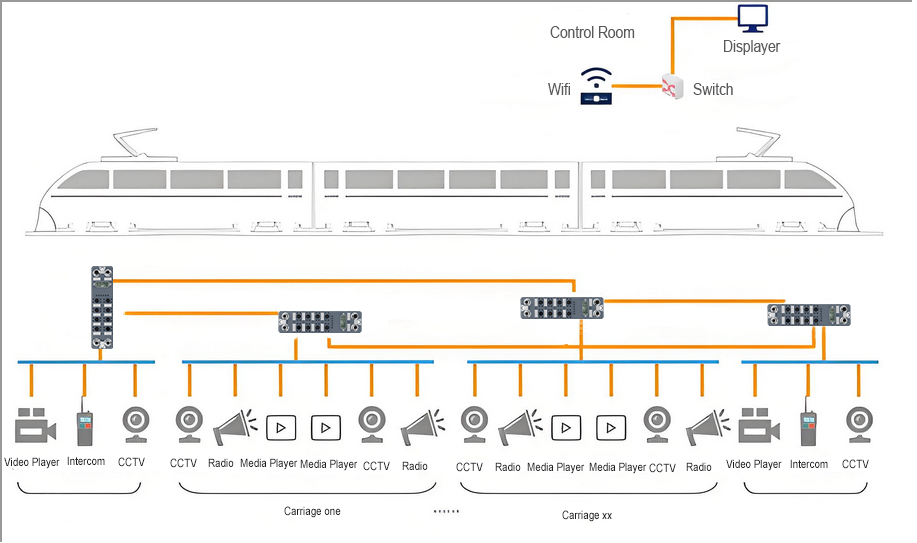
Core Applications in Rail Transit Systems
-
Trackside Communication Networks:
-
CBTC (Communications-Based Train Control): IP67 switches form the backbone of the trackside data network, enabling continuous, high-speed data exchange between trains and control centers for precise train positioning, speed regulation, and safety interlocks.
-
Passenger Information Systems (PIS): They connect trackside displays, announcement systems, and sensors, delivering real-time schedule, safety, and emergency information to passengers on platforms.
-
-
Onboard Train Networks (Ethernet Train Backbone):
-
In-Vehicle Systems: Mounted on the undercarriage or within inter-car gangways, IP67 switches network critical onboard systems such as CCTV surveillance, passenger infotainment displays, door control units, and diagnostic sensors, even when exposed to moisture, dirt, and shock.
-
-
Station and Depot Infrastructure:
-
Platform Edge & Tunnel Systems: They connect CCTV cameras, public address systems, access control, and emergency call points in wet and dirty areas.
-
Depot & Maintenance Facilities: Withstanding wash-downs and dusty conditions, they network automated inspection systems, asset tracking tools, and diagnostic equipment to streamline maintenance operations.
-
-
Security and Surveillance:
-
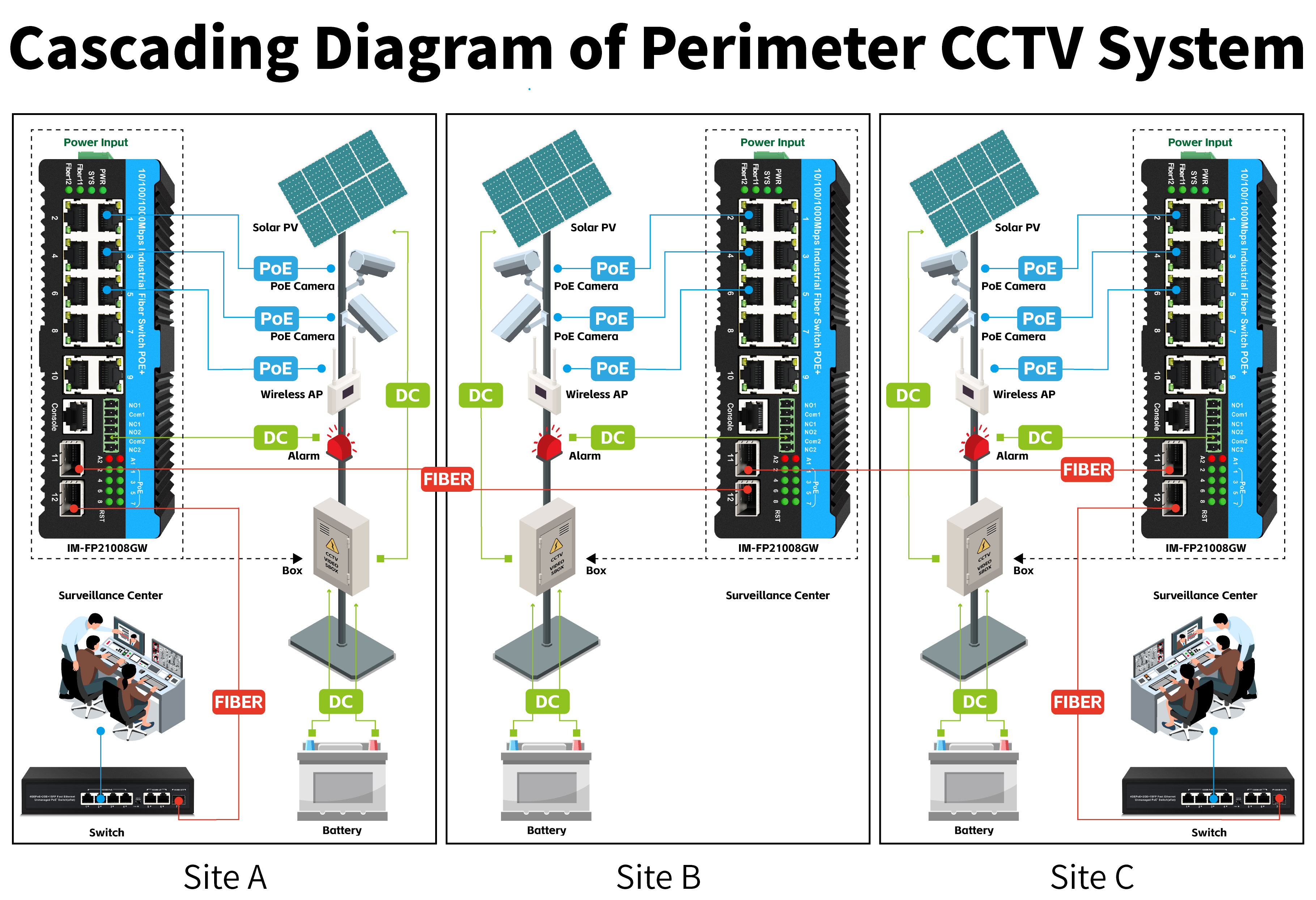
Trackside and Station CCTV: IP67 switches provide reliable power and data (via PoE) to outdoor and tunnel-mounted security cameras, ensuring uninterrupted surveillance for both safety and security purposes.
-
Conclusion
In the digitally transforming world of rail transit, network reliability is synonymous with operational safety and efficiency. IP67 industrial Ethernet switches are more than just networking components; they are engineered solutions for mission-critical connectivity. By guaranteeing performance amidst dust, water, vibration, and temperature extremes, they form the resilient, hidden nervous system that supports modern signaling, passenger services, train operations, and security. Their deployment is a strategic imperative for building smarter, safer, and more reliable rail networks for the future.
How the Olycom IM-WP054BGE Solar PoE Switch Works?
EtherCAT I/O Modules: The Nervous System of Modern Industrial Automation
Related Article