What is a bypass switch?
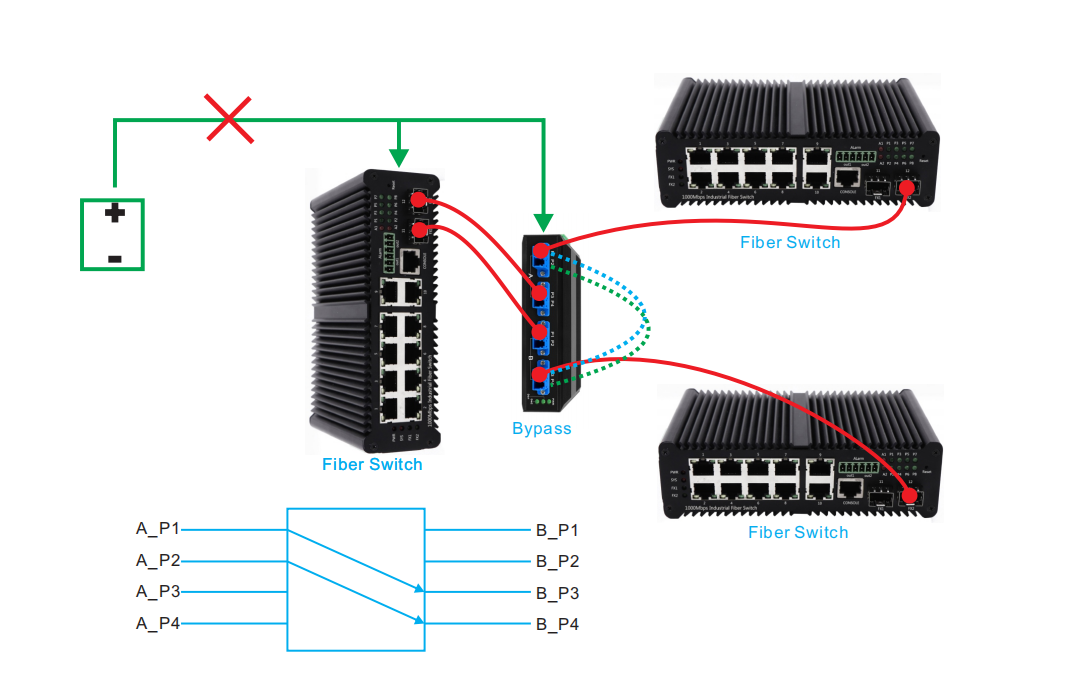
When the Intranet device or network security tools, such as the firewall, NGFW, IDS/IPS, WAF, DDOS, and other security detection tools, are faulty or need to go offline due to device replacement, the Bypass switch automatically reroutes link traffic to ensure uninterrupted network traffic.
What is a bypass switch?
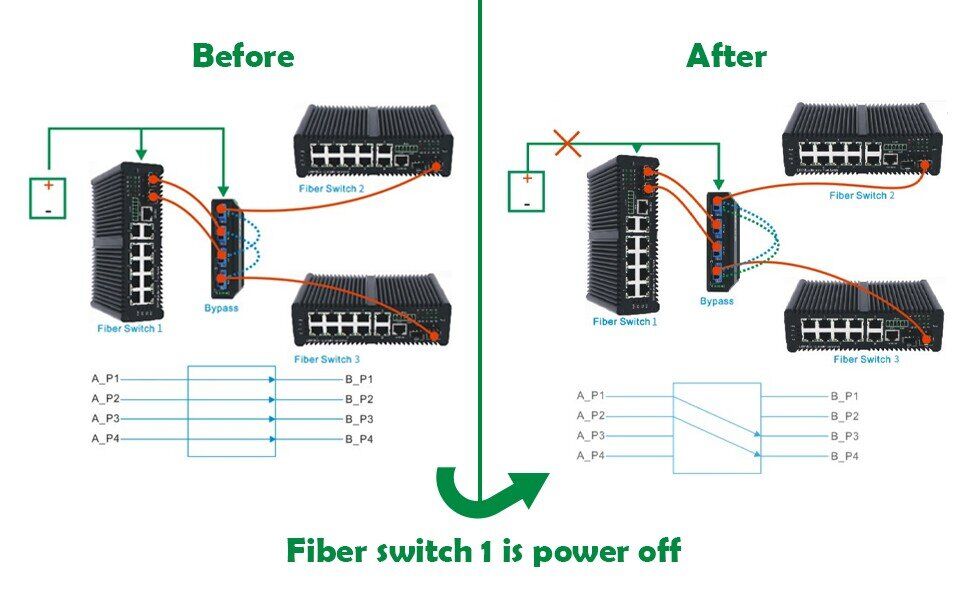
The Bypass Optical Protection System is an advanced optical path switching technology utilized in the domain of optical fiber communication. This intelligent system is designed to automatically bypass dysfunctional network nodes. It has the ability to detect the power supply and optical signal output status of the network nodes. In case of a local optical equipment failure, such as hardware or software malfunction or power disruption, the system will promptly switch to the bypass optical path. This will allow the communication line to bypass the faulty node, preventing the obstruction of the entire network and ensuring seamless connectivity of the system.
For any network that requires uninterrupted operation, redundancy and security are critical. A bypass switch is used to connect network segments to specific network access points (TAPs) where active in-line devices such as security tools for inspection and monitoring purposes exist.
Functionally, it can automatically reroute traffic by monitoring the status of the monitoring tool or manually redirect traffic. For example, when we need to maintain or replace a monitoring tool, we can actively disconnect the connection without affecting the connectivity of the main link.
How bypass switch works?
Optical switch is an optical device with one or more optional transmission ports, which is used to physically switch or logically operate the optical signals in the optical transmission line or integrated optics.

Let’s talk about its working principle using the D2*2B bypass optical switch.
When the device is working normally, the optical signal is input through the A-P1 P2 port, enters the device through the B-P1 P2 port, is transmitted to the optical switch through the A-P3 P4 port, and is output from the B-P3 P4 port.
When the equipment fails, the optical signal identifies the abnormal status of the optical signal and the electrical signal. The optical signal is input through the A-P1 P2 port and directly output from the B-P3 P4 port, thereby bypassing the fault point and transmitting directly, thereby effectively avoiding A single right-point failure brought down the entire network.
What problems does the Bypass switch solve?

Many security solutions install monitoring devices directly in series, which poses three security risks:
1.If a device fails, a link goes down, or power is lost, inline tools create a single point of failure on the network;
2.Device processing of data may increase latency and reduce network performance;
3.Data integrity can be compromised due to frame misalignment or packet loss.
The Bypass switch solves this problem by implementing secure fault tolerance, keeping the network running smoothly in the event of an inline device failure or issue. The Bypass switch can conveniently manage online tools without interrupting the network when the tools require maintenance or replacement.
The Bypass switch can avoid any interruptions to critical APs or network links. When network devices are unable to handle or transmit traffic, the Bypass switch will bypass the network devices and redirect data traffic.
If the Bypass switch itself is somehow damaged, it contains a relay switch designed to close and enter "bypass mode," allowing traffic to seamlessly flow through its cables to maintain an ope and uninterrupted link. The Bypass switch plays a key role in blocking malicious attacks on network security devices.
How Intelligent Transport System Works with Industrial Ethernet Switch
What is Intelligent Transportation System?
Related Article