How to Upgrade Industrial Networks?

Industrial networking is at the forefront of technological advancements and operational efficiency, serving as a critical component in today's industrial landscape. With the emergence of Industry 4.0 and the Industrial Internet of Things (IIoT), the challenges and trends within this sector have become increasingly prominent. In this extensive blog post, we explore the intricacies of industrial networking, analyzing current challenges and strategies for constructing future industrial network communications.
What is an Industrial Communication Network?
Industrial networking, often referred to as the backbone of industrial processes, encompasses the interconnected web of devices, systems, and applications that facilitate data exchange and communication within manufacturing and production environments. This intricate network enables real-time monitoring, control, and optimization of operations, which in turn boosts productivity and supports well-informed decision-making processes.
These networks, which can be either LAN (Local Area Network, which is used in a limited area) or WAN (Wide Area Network which is used as global system) enabled to communicate vast amounts of data using a limited number of channels. Industrial networking has also facilitated the adoption of diverse communication protocols amidst digital controllers, field devices, automation software tools, and external systems.
Current Challenges in Industrial Networking
One of the most pressing issues in industrial networking is the increasing susceptibility to cybersecurity threats. With the rise of interconnected industrial environments, the threat of network attacks on critical infrastructure has skyrocketed. To guard against malicious actors, comprehensive cybersecurity measures that span both Information Technology (IT) and Operational Technology (OT) must be implemented. This entails implementing stringent protocols, conducting regular vulnerability assessments, and installing advanced intrusion detection systems to strengthen defense mechanisms.
As the number of connected devices and data generation continue to grow exponentially, the concerns surrounding network bandwidth and latency become intensified. This issue is particularly critical in industrial settings that require real-time or sub-second decision-making, where network latency can result in inefficiencies or safety hazards. To tackle this problem, it is essential to optimize the network infrastructure, adopt faster communication technologies, and implement intelligent data processing methods. Doing so will help mitigate the challenges associated with bandwidth and latency and ensure maximum efficiency and safety in industrial networking.
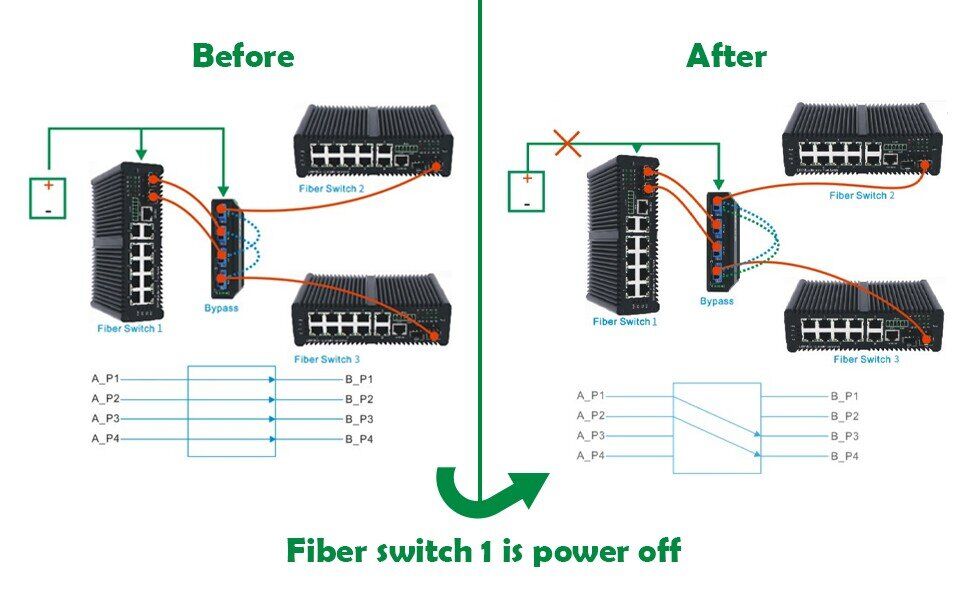
In today's industrial landscape, operations are often conducted across vast and inhospitable environments, necessitating reliable connectivity as a top priority. Potential setbacks such as electromagnetic interference, signal attenuation, and equipment malfunctions can cause network outages that adversely affect production efficiency and data flow. To mitigate these risks, it is imperative to adopt redundant design, devise emergency recovery plans, and implement anti-interference technologies that enhance network reliability and resilience.
How to Upgrade Industrial Networks?
Embrace a Comprehensive Network Assessment: Starting the process of upgrading your network requires a detailed examination of the current infrastructure. This involves analyzing network architecture, identifying any potential bottlenecks, and locating any vulnerable security areas. Conducting a thorough assessment sets the foundation for developing effective upgrade plans that are in line with your organizational objectives.tial financial or reputational losses.
Leverage Cloud Computing: Cloud computing plays an increasingly critical role in empowering industrial networks by providing remote access to critical applications, data storage, and computing resources. Cloud computing can enhance network agility and scalability, reduce operational costs, and improve response times. By leveraging cloud solutions, organizations can tap into a vast array of web-based resources and services, boosting productivity and competitiveness.
Revolutionize your network infrastructure with Software-Defined Networking (SDN). This innovative technology separates network control from hardware infrastructure, facilitating dynamic configuration, centralized management, and simplified provisioning of network resources. By abstracting network functionality, SDN empowers organizations to quickly adapt to evolving demands, enhance scalability, and streamline network operations. Gain a competitive edge in the industrial networking landscape with SDN.rategic decisions and stay ahead of the game.
Conclusion
Through digital innovation, industrial networking is transforming to embrace the future. Organizations are navigating challenges, fortifying cybersecurity, transitioning to modern systems, and building robust networks to stay ahead of the curve. By tracking emerging trends such as 5G, AI, and blockchain, enterprises are charting a course toward an efficient and secure industrial future. As industry evolution reshapes the landscape, we are propelled into a connected era of boundless possibilities.
Why Industrial automation will dominate our future
The applications and advantages of Bypass Switches in Intelligent Transportation
Related Article