The difference between PDH optical transceiver and SDH optical transceiver
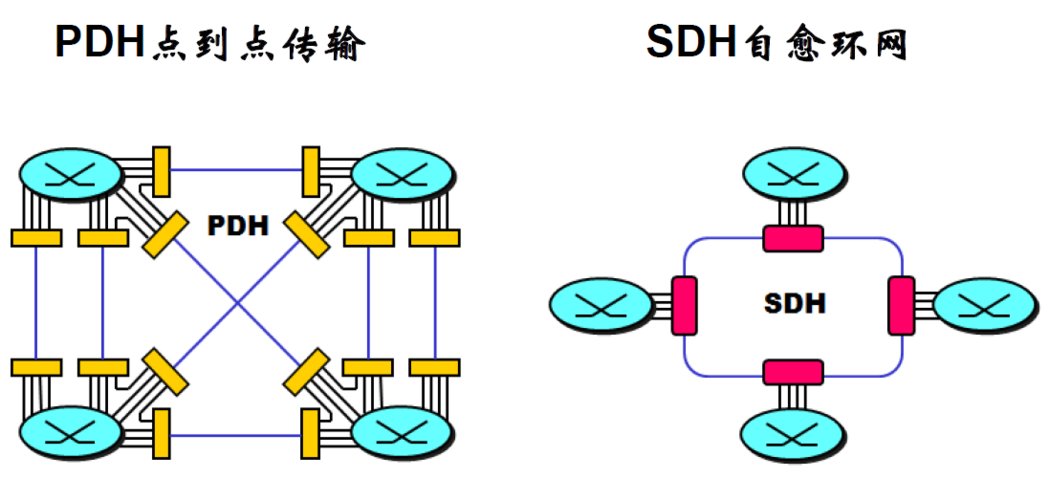
In the digital transmission system, there are two digital transmission series: Plesiochronous Digital Hierarchy (PDH) and Synchronous Digital Hierarchy (SDH). PDH optical transceiver is a small Capacity optical transceivers that are commonly used in point-to-point applications. They usually operate in pairs. The capacity of PDH optical transceivers is generally 4E1, 8E1, 16E1; SDH refers specifically to synchronous digital transmission systems designed to provide high-speed data transfer over optical fiber networks.
Plesiochronous Digital Hierarchy (PDH optical transceivers) establish highly accurate clocks on every node of the digital communication network, with each clock signal adhering to a unified standard rate. Although each clock exhibits high precision, slight discrepancies inevitably persist. In order to ensure communication quality, it is essential that the difference between these clocks remains within a specific range. Consequently, this synchronization method is technically not genuine synchronization, which is why it is commonly referred to as "Plesiochronous".
In the past, PDH equipment was primarily utilized in telecommunications networks due to its superior adaptability to traditional point-to-point communications. However, with the swift advancement of digital communications, direct point-to-point transmissions have become less common, and most digital transmissions now require transfers. As a result, the PDH series is no longer able to satisfy the demands of modern telecommunications business development and the requirements of effective telecommunications network management. SDH is a transmission system that emerged to meet this new need.
SDH optical transceivers
The DH (Synchronous Digital Hierarchy) optical transceiver provides a large capacity, typically ranging from 16E1 to 4032E1. SDH is a comprehensive information transmission network that combines multiplexing, line transmission, and switching functions, all of which are managed by a unified network management system.It is a synchronous optical network (SONET) proposed by the Bell Communications Technology Research Institute in the United States. The Consultative Committee on International Telegraph and Telephone (CCITT) (now ITU-T) accepted the SONET concept in 1988 and renamed it SDH, making it a universal technical system applicable not only to optical fiber but also to microwave and satellite transmission.This versatile technology enables effective network management, real-time business monitoring, dynamic network maintenance, and interoperability between equipment from different manufacturers. It also greatly enhances network resource utilization, reduces management and maintenance costs, and promotes flexible, reliable, and efficient network operation and maintenance. As such, SDH is currently a hot topic in the development and application of transmission technology in the information field worldwide.
In the past, PDH equipment was extensively utilized in telecommunications networks due to its excellent adaptability to traditional point-to-point communications. However, with the rapid advancement of digital communications, direct point-to-point transmissions have become less and less common, and most digital transmissions now need to go through transfers. As a result, the PDH series is no longer able to meet the requirements of modern telecommunications business development and network management.
To address this new need, the SDH transmission system was introduced. The concept of SDH was first proposed by the Bell Communications Research Institute in the United States, which referred to it as the Optical Synchronous Network (SONET). SDH is an integration of high-speed, large-capacity optical fiber transmission technology and intelligent network technology that is flexible and easy to manage and control. The primary intention was to standardize the optical path and enable interoperability among products from different manufacturers, enhancing network flexibility.
2. The new concept of self -healing network is proposed. The form of self -healing protection capabilities composed of SDH devices can automatically restore normal communication through self -healing network when the main signal of the media is cut.
3. The unified bit rate and interface standard, is possible for the interconnection between different manufacturers.
4. The byte re -connection technology makes the signal of the upper and lower branch circuits in the middle of the network very simple.
1, the frequency band utilization rate is low, which naturally reduces the effectiveness due to increased reliability;
2, the pointer adjustment mechanism is complex;
3. The automation of OAM also increases the impact on network security.
What is an E1 protocol converter?
What is a serial server?
Related Article