What is a serial server?
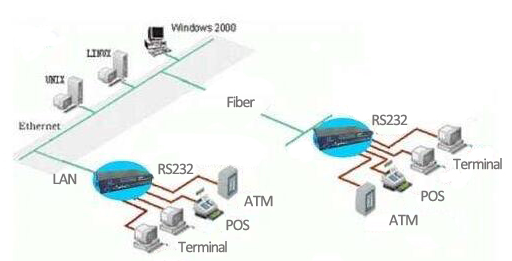
The serial server is an interface converter for data conversion between RS-232/485/422 and TCP/IP communication. It provides two-way data transparent transmission between RS-232/485/422 serial port and terminal TCP/IP network, and provides serial port to network function and RS232/485/422 to network solution. It allows serial devices to now join the network, connect to the network for data communication, and extend the communication distance of serial devices.
Features of serial server
Internally integrated with ARP, IP, TCP, HTTPS, ICMP, SOCKS5, UDP, DNS and other protocols, this product also features automatic data conversion control through RS-485/422. The device includes a three-way serial interface with baud rates ranging from 300-230.4KBPS. The product supports both dynamic IP (DHCP) and static IP and can be used in conjunction with gateways and proxy servers to transmit data over the internet. It offers transparent two-way data transmission and requires no adjustments to the original system. Additionally, all serial ports have built-in 600W lightning protection. Featuring 10/100M Ethernet, this product automatically detects straight-through or crossover network cables and can support multiple connections.
Way of working
1. TCP/UDP Communication Mode: In this mode, a pair of serial servers are utilized with one serving as the server and the other as the client. By establishing a connection through IP address and port number, two-way transparent data transmission is achieved. This mode is ideal for converting the bus connection between two serial devices into a TCP/IP network connection.
2. Virtual Serial Port Communication Mode: Through this mode, one or more converters connect with a computer providing two-way transparent data transmission. The virtual serial port software installed on the computer efficiently manages these converters, allowing one virtual serial port to correspond to multiple converters, and N virtual serial ports to M converters (N≦M). This mode is ideal for controlling 485 bus or 232 devices from a computer.
3. Network-Based Communication Mode: In this mode, the application program on the computer writes a communication program based on the SOCKET protocol. Simply select the option to support the SOCKET protocol in the converter settings.
Advantages of serial server
1) Enhance the communication range of serial devices. By utilizing a serial server, a serial device can instantly attain the ability to connect to a TCP/IP network interface for data communication, thereby expanding the communication distance of the device.
(2) Provide remote control and data transmission functions. Through the serial port server, users can use the Internet to connect to computers anywhere in the world to store, manage and remotely control machines and equipment.
3) Increase data transmission efficiency. The serial server is able to convert a serial device into a TCP/IP network interface, allowing for two-way and seamless data transmission and ultimately enhancing overall data transmission efficiency.
4) Support virtual serial port protocols. The serial erver has the ability to uphold virtual serial port protocols, eliminating the need for users to modify original PC software.
In a word, the serial server offers the capability to convert serial port data into TCP/IP protocol data thereby providing serial port to network functionality. This feature facilitates two-way transparent transmission between the network and serial port. This versatile technology is extensively utilized in various domains including access control/attendance, industrial automation, remote monitoring, parking lot management, high-speed toll stations, charging piles, and many more.
The difference between PDH optical transceiver and SDH optical transceiver
How to protect industrial networks?
Related Article