What is industrial automation?
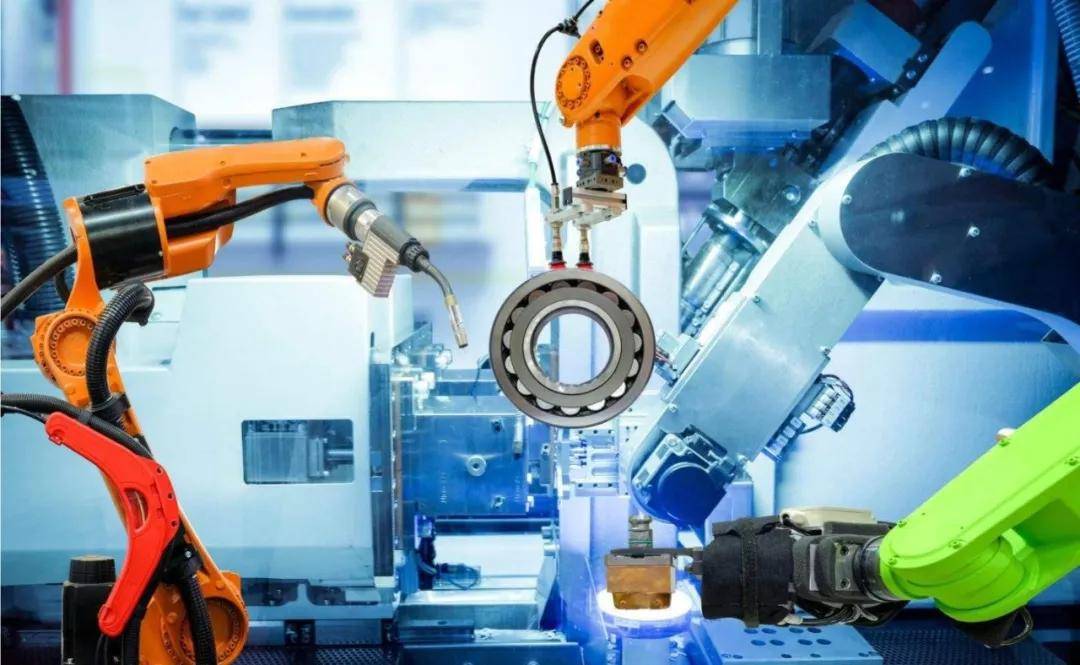
What is industrial automation?
Industrial automation refers to the use of technology and machines to perform tasks previously done by humans. It involves the integration of various technologies such as artificial intelligence, robots, sensors, and software systems into the manufacturing process. The main goal of industrial automation is to simplify the production process while increasing efficiency and productivity.
Automation technology includes a wide range of tools and techniques such as robots, Numerical Control (NC) machine tools, Programmable Logic Controllers (PLC), Computer Numerical Control (CNC) systems, and industrial sensors. Automation systems can be integrated into existing production lines or operated independently, and can be used to collect data for preventative equipment maintenance.
One key aspect of industrial automation is its reduction of the demand for physical labour, which is especially helpful in industries involving repetitive or hazardous tasks. By automating these tasks through machine automation, companies can minimize the risk of worker injury while also reducing labour costs.
Industrial automation encompasses a variety of applications in different industries, such as automobile manufacturing, food processing, aerospace engineering, and pharmaceuticals. In fact, almost every industry today uses some form of industrial automation to enhance their productivity levels. Industrial automation has become an integral part of modern production processes due to its many advantages, such as improved efficiency and accuracy, reduced operating costs, and downtime.
What are the types of automation?
Several types of automation have been identified in the manufacturing industry, including Fixed Automation, Programmed Automation, Flexible Automation, and Integrated Automation.
Fixed Automated System
After covering the fundamental layout of industrial automation systems, let's delve into the intricacies of Fixed Automation Systems. These diverge from Variable Automation Systems in that they operate at a consistent rate throughout the day, with no alterations between shifts. They are commonplace in manufacturing and food service industries where efficiency and high-volume production are essential to prosperity.
Programmable Automation System
In a Programmable Automation System, electronic controls enable the sequence of operations and machinery configuration to be altered, thereby enhancing productivity in batch process production. However, the reprogramming process typically demands substantial time and effort.
Flexible Automation Solutions
A Flexible Automation System is typically computer-controlled and is commonly utilized in scenarios where the product specifications vary frequently. By inputting a specific code into a computer, the system can access the necessary tools or equipment required to generate different effects, much like the countless versions of a car model available based on its year or trim level. CNC machines serve as a best example of this automation system.
SYSTEM Integrated Automation System
An Integrated Automation System comprises mutually independent equipment, procedures, and data, all operatively synchronized and controlled by automated systems to execute a seamless production automation system. Simply put, it refers to the utilization of CAD software or computer-controlled devices such as robots or computers instead of laborious human intervention in the workplace.
Advantages of industrial automation
Industrial automation refers to the use of various advanced technical means to automate and intelligentize various operations in the industrial production process. With the continuous development of science and technology, industrial automation has gradually become the mainstream trend of modern industrial production. The advantages of industrial automation will be discussed below from multiple perspectives.
1. Improve production efficiency
Industrial automation can realize the automation and intelligence of the production process, thereby greatly improving production efficiency. Compared with traditional manual operations, automated production can reduce manual intervention, shorten the production cycle, and improve production efficiency. In addition, automated production can also avoid human errors and mechanical failures, thereby further improving production efficiency and stability.
2. Reduce production costs
Industrial automation can reduce labor costs and material waste, thereby reducing production costs. Automated production can replace manual operations, reducing labor costs and human errors. In addition, automated production can also achieve precise control of materials and minimize waste, further reducing production costs.
3. Improve product quality
Industrial automation can achieve high-precision and high-stability control of the production process, thereby improving product quality. Automated production can reduce human errors and mechanical failures, and avoid the impact of manual operations on product quality. In addition, automated production also enables precise monitoring and adjustment of the production process to ensure product quality and consistency.
4. Improve work safety
Industrial automation can replace manual operations and avoid workers working in dangerous environments, thus improving work safety. Automated production can prevent workers from being exposed to harmful substances and high-temperature environments, thereby reducing work risks and accident rates.
5. Improve enterprise competitiveness
As market competition intensifies, companies need to continuously improve production efficiency and quality and reduce production costs in order to occupy a dominant position in the market. The wide application of industrial automation can effectively improve the production efficiency and quality of enterprises, reduce production costs, and thereby improve the competitiveness of enterprises.
In short, industrial automation is a modern industrial production method with wide application prospects and important significance. It can improve production efficiency and quality, reduce production costs, improve work safety, and further enhance the competitiveness of enterprises. With the continuous development of science and technology, industrial automation will be applied in more fields and make greater contributions to the development of modern industry.
Conclusion
To sum up, industrial automation has broad prospects. It can improve production efficiency and product quality, improve the working environment and safety, realize intelligent management and remote monitoring, and be applied to more industry fields. For enterprises, the introduction of industrial automation technology will be an important measure to improve competitiveness and achieve sustainable development.
What is Intelligent Transportation System?
Applications of ERPS on Industrial Ethernet Switch
Related Article