What is a VLAN and how does it work?
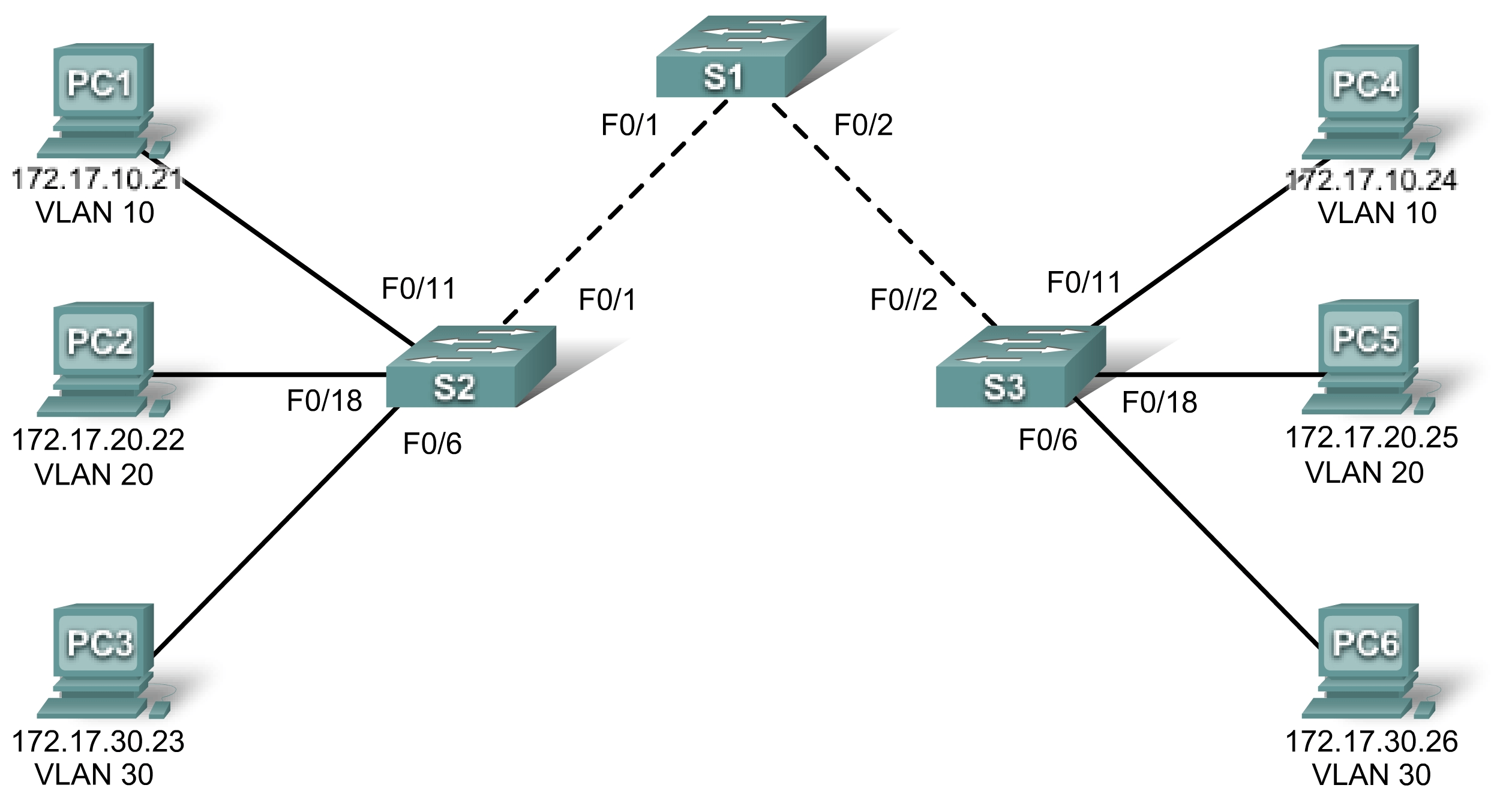
What is VLAN?
VLAN (Virtual Local Area Network) is a network technology that allows devices in a local area network (LAN) to be logically divided into multiple virtual network segments. Each virtual network segment is called a VLAN.
The main advantages of VLAN include simplifying network management, improving network security, controlling broadcast domains, reducing network congestion, etc. The division of VLANs is not limited by physical location and can be grouped according to the location, role, department or application and protocol of network users. VLAN technology can be implemented on the same switch or across multiple switches. VLANs can be created and managed through the switch's TRUNK ports or VLAN tags.
How do VLANs work?
Without VLANs, issues associated with the design of broadcast networks (congestion, high CPU overhead, poor security) can metastasize quickly because Ethernet infrastructure gear, such as hubs and routers, enable network managers to create interconnected networks made up of multiple physically separate LANs. As an example, a business could establish individual LANs for each of its departments and then interconnect them using hubs that are all linked to a central Ethernet switch.
Traditionally, VLANs are defined at the port-level of an Ethernet switch. Switches offer the benefit of allowing the interconnected network to be partitioned into smaller domains. However, since these domains are still broadcast domains, the switch acts as a bottleneck, limiting overall capacity.
VLANs give network managers the ability to create virtual domains that lump together devices that frequently communicate with one another. This reduces congestion and CPU overhead, while also enhancing security by restricting the number of devices allowed to access each VLAN. To handle traffic going from one VLAN to another, most networks are designed to pass that traffic off to routers.
Using network management software, each device within a VLAN is assigned a unique VLAN ID and added to a VLAN group.This means that devices can be in any of the physical LANs connected to the switch, yet still be segmented and isolated within a VLAN group that functions as a connected LAN.
To transition a device from one VLAN to another, network administrators can simply relocate the device to a different switch port or allocate it to a new VLAN using management software, depending on the network's configuration.
What are the benefits of VLANs?
- Control broadcast storms: As a network segmentation technology, VLAN can logically limit the broadcast domain within a VLAN, thereby preventing broadcast storms from affecting other network segments. This reduces traffic on the backbone and increases the speed of the network.
- Enhance network security: Through VLAN technology, you can restrict access to specific users, control the size and location of broadcast groups, and even lock the MAC addresses of network members. Such measures can enhance network security and prevent unauthorized users and network members from using the network.
- Enhanced network management: VLAN allows centralized management of the entire network using VLAN management programs, making network management and maintenance easier. Users can quickly create and adjust VLANs according to business needs, and when using link load balancing, the management program can automatically redistribute services.
- Increase the flexibility of network connections: VLAN technology allows different locations, different networks, and different users to be combined to form a virtual network environment, similar to the operating experience of a local LAN.
An introduction of HDMI optical tranceiver
Why Industrial automation will dominate our future
Related Article